Early Lessons Learned from Duke Energy’s Electric School Bus Pilot
The yellow school bus is arguably the most iconic representation of public transportation in the U.S. While its safety and efficiency have evolved with the bus’s near 100-year history of operation, many of its classic characteristics have remained unchanged. But now, the yellow school bus might bring to mind another color for students, drivers and parents: green.
In 2020, the North Carolina Utilities Commission approved a Duke Energy electric transportation pilot that contained a suite of pilot programs, including one incorporating electric school buses. This pilot program’s purpose is to explore the potential for vehicle-to-grid (V2G) power flow from electric school bus batteries. As a condition to approving the pilot, the Commission directed Duke Energy to, “gather operational data with respect to charging characteristics, usage patterns, and technology issues relating to bidirectional power flow to and from the battery” for up to 30 electric school buses (15 each for Duke Energy Carolinas and Duke Energy Progress).
Since then, Duke Energy, certain schools and project partners have been leveraging funds from several sources, purchasing buses and charging equipment, permitting and installing this equipment, and ultimately using the buses to safely and reliably transport students daily. There are currently 26 electric school buses enrolled in the pilot (13 each for Duke Energy Carolinas and Progress).
In February 2025, Duke Energy requested a 12-month extension (through June 2026) for the pilot to give the utility additional time to evaluate bidirectional charging capabilities. This request stemmed from supply chain issues that delayed participating schools receiving their buses as well as lags in the development of V2G technology. The Commission approved it in March 2025.
Although the pilot continues on, Duke Energy worked with us — a technical consultant on the project — to share early lessons learned and project insights. So, what makes for an A+ electric school bus deployment?
The Groundwork: Equipment, Site Selection and Utility Coordination
As with most new projects, effective planning is key.
Bus Selection & Timeline: First, the process for ordering an electric school bus can take up to a year. Securing funding (especially if using various sources) is a major contributor to the timeline. From there, manufacturing lead times are often, similarly, as long as a year and can be affected by supply chain disruptions.
- Work with your preferred school bus dealer to discuss your typical bus service and ensure that an electric model will meet your route, geographical and seasonal considerations.
- Discuss maintenance and service agreements to confirm that the desired services and support are provided by the local dealer.
Site Selection and Utility Planning: Coordinating with the utility in your service area is essential for successful deployment and for avoiding unexpected issues after purchasing your bus and charger. Here are the top areas to focus on:
- Consider how and where you intend to operate the school buses. Is the power supply sufficient to serve them, or will it require upgrades? If there is a need to upgrade, will a utility service revenue credit cover the costs, or will there be a need for customer contribution?
- Engage the utility early in the project. If needed, the time to upgrade the power supply can be influenced by many variables, including the size of an upgrade, equipment availability (e.g., transformers), the existing queue of requests, etc.
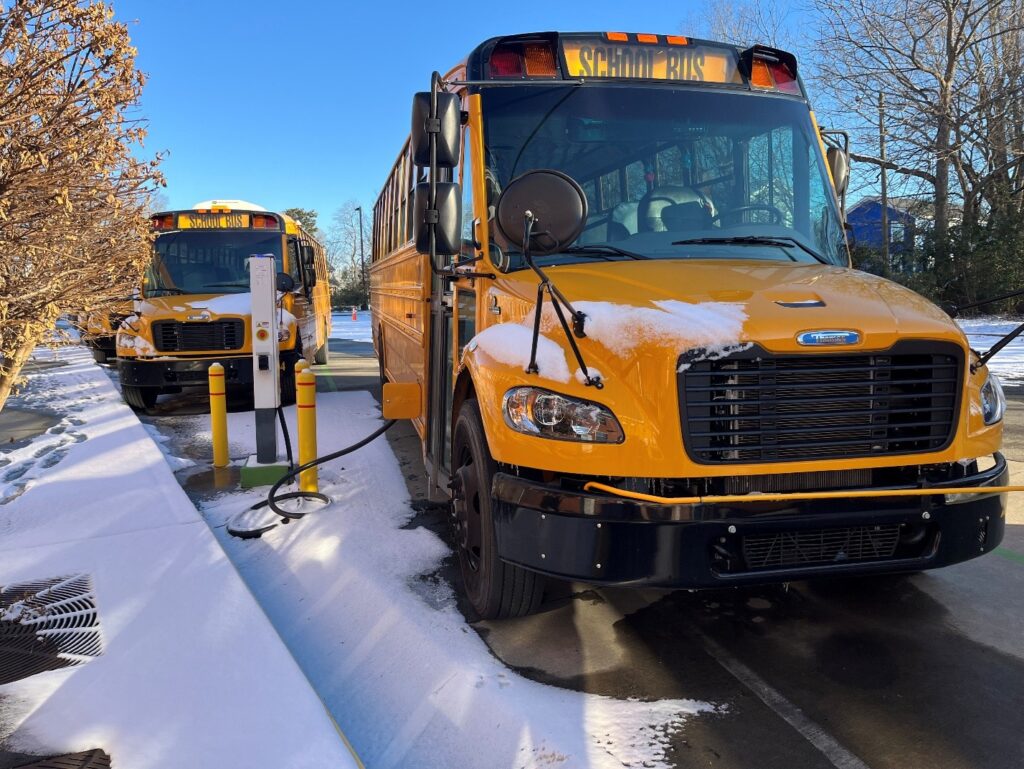
- Consider how the orientation of the bus at the site will position the charger cords. Will it expose the charging port to traffic or keep it safely away? Will the port be located in the front or the back? Will the charging cord be on the driver’s side or passenger’s side? Will using the cords create a tripping hazard for drivers or students?
- Determine whether your bus will be publicly accessible or secured in a gated facility. If it will be publicly accessible, consider installing authorization controls, which limit charging use to those with RFID cards or to approved buses. This measure will prevent the theft of electricity from unauthorized vehicles. Similarly, if the bus is publicly accessible, can students or others unplug the charger or hit the emergency stop button on weekends? Deploying cameras can assist with these potential issues.
- Fuel savings are an important operational benefit of an electric school bus. Work with your utility account manager to understand the best rate schedule for the charging equipment that will be installed.
- Time-of-use rates encourage electricity usage during off-peak demand hours and can potentially save money. Understanding the school bus use case along with the time needed to charge to meet operational expectations is essential when considering the best rate.
- Charging management tools can aid with scheduling charging and shifting usage to opportune times. Remember to include the cost of the charging management tools when calculating the rate.
- Demand charges can affect operational costs, so it’s important to consider how the charging equipment, number of buses and quantity of chargers interact. Remember, the faster the charging capability (i.e., the higher the charging load), the greater its impact on demand charges.
- As a result of the items above, it’s essential to understand metering and billing considerations to manage operational costs. Costs may differ if bus charging is served by a dedicated meter as compared to being fed by a service that combines the bus and other operations.
Managed charging can result in significant savings. As an example, working with a pilot participant, the project team identified an opportunity to reduce demand charges. The customer had a 60-kilowatt (kW) charger, which easily met its buses’ operational needs. However, an analysis found that the buses could charge at a 25-kW charging rate, still meet charging needs and save approximately $200 per bus per month in demand charges. Consider the following scenario for how these types of savings might be calculated:
A customer has an electric bus with a 60-kW charger. During the month, the bus uses 4,000 kilowatt-hours (kWh). The customer is on a service rate that has a kWh energy charge of $0.07506 and a demand charge of $6.12 per kW. Here’s an example of its energy bill without managed charging:
- Basic Charge = $30
- Energy Charges: 4,000 kWh x $0.07506/kWh = $300.24
- Demand Charges: 60 kW x $6.12/kW = $367.20
- Total Cost (not including other service fees): $697.44
Observe the difference when the customer manages charging by reducing the 60-kW charger to 25 kW.
- Basic Charge = $30
- Energy Charges: 4,000 kWh x $0.07506/kWh = $300.24
- Demand Charges: 25 kW x $6.12/kW = $153.00
- Total Cost (not including other service fees): $483.24
In conjunction with account management, Duke Energy has formed a Fleet Electrification team to act as a liaison and guide customers through these considerations and decisions. The Fleet Electrification team may be contacted at fleetelectrification@duke-energy.com.
Charger Selection and Construction: In addition to bus selection and the parameters of utility service, selecting an appropriate charger is an important aspect of deployment.
- In many cases, schools can work with the school bus dealer to understand the preferred charger. School bus manufacturers have qualified chargers that work best with their buses. Ordering chargers from the bus dealer also serves to keep operational accountability (such as warranty service) centralized with an entity that has an interest in ensuring the school customer is well served.
- Size your charger to your operations. Do your routes and battery capacity suggest a need for a 19-kW AC charger or a 60-kW DC charger? The time to charge and the costs to procure and operate are vastly different. Work with your bus dealer to assess your unique operational needs. Reference the examples above to understand how different chargers can impact your utility rates. In terms of time to charge, a 60-kW charger would add approximately 25% state of charge every hour for a typical electric school bus. So, it would take about four hours to reach a full charge. For comparison, a 19-kW charger would require almost 12 hours to reach a full charge.
- Sequential chargers can alternate sharing power between two buses. This can reduce initial charger costs but may extend charge times or affect reliability because two buses are impacted by one charger outage. There are operational and cost considerations when determining if sequential chargers are a good fit.
- Consider the need for redundancy in case chargers are temporarily down or power is interrupted. In such an event, is a non-electric bus available? Is it possible to have a backup charger? Are there public DC fast chargers in the local area?
- Opt for chargers that meet all necessary UL certification standards for electric utility interconnection purposes. Particularly if you intend to conduct V2G operations, confirm the requirements with your utility’s interconnection team.
- Select chargers that are OCPP certified and can be connected to energy management “networks.” This allows for more flexibility if the operators need to make changes for networking. When purchasing a charging station, be sure to ask if the equipment could run on a different network if needed.
- Consider the support provided for the charger. Do charging providers have local resources that can work on the unit? How accessible is phone support? What are their operating hours? Are there service level agreements that you can put in place? Is periodic maintenance required, such as replacing filters?
- Understand that permitting the construction of electric vehicle chargers can be unique to each jurisdiction and may cause delays. Is the jurisdiction familiar with chargers? Does it have unique requirements for them? Is the location within a historical district requiring a special review?
Implementation and Operations: Managing for Success, Driver Training and Energy Management
As you prepare to deploy your bus, plan for smooth operations and maximize energy cost efficiency.
- Consider using an energy management network to understand and manage charging patterns, charging rates and energy usage. If on a time-of-use rate or managing around demand charges, an energy management network will allow for charger scheduling and reporting.
- Monitor charging station reliability and network connectivity. Keeping a record of charging errors can help expedite resolution and prevent future errors from occurring. For example, are errors caused by bus operators improperly connecting the bus, or are software or hardware components failing? Are the cellular communications properly operating? An energy management network can remotely provide useful insight into reliability and connectivity. Many networks will also proactively alert operators when faults occur and provide codes to help with diagnosis.
- Operators should confirm claims on expectations of charger uptime and metrics. Some networked chargers will show a high percentage of uptime (when a charger presents its operational status as “available”). Validating this metric can be valuable when deploying electric school buses. For example, a charger may show as available but not be successfully charging the bus.
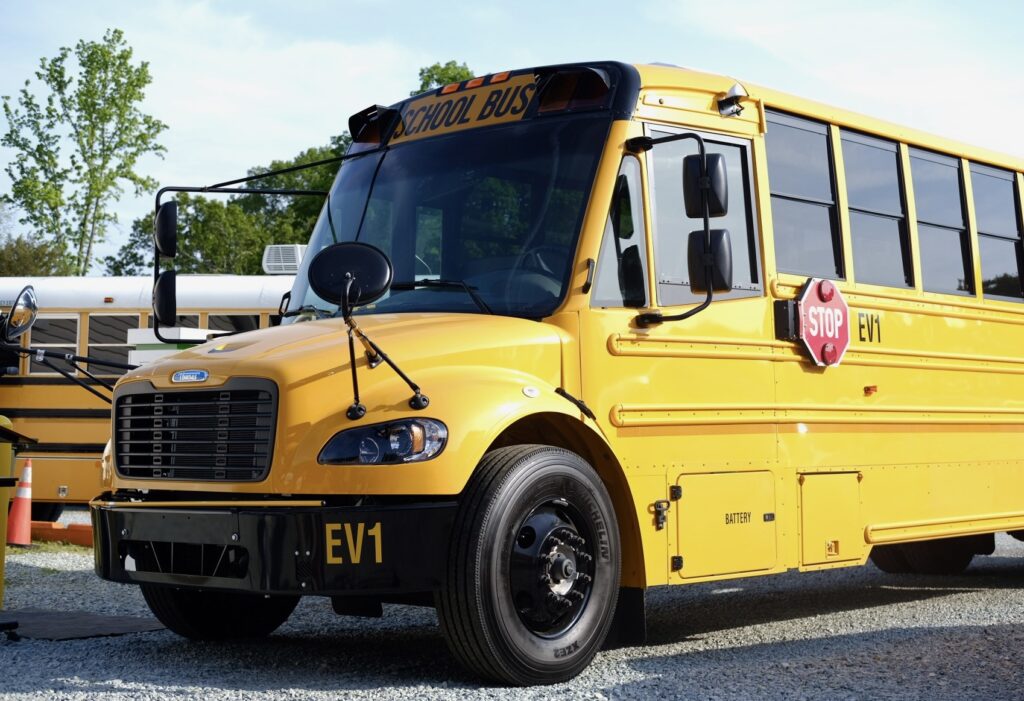
- Electric school buses differ from diesel buses and require training. For starters, when plugging in, drivers must ensure the bus connects with the charger and begins charging. In addition to hands-on training for the bus and charger, provide drivers with printed job aids and contact information for technical support.
- Listen to the experience of drivers. They may have a distinct perspective on bus and charger operations.
- Consider the impacts of seasonality. So far, none of the school buses in the pilot have experienced route limitations due to seasonality. However, changing temperatures, especially extreme cold and heat, can impact vehicle efficiency. Consider these changes when managing your charging schedules or routes. It may take longer for a bus to reach a full state of charge in the winter and summer months, especially if recharging is required midday between routes.
Key Themes
To summarize, here’s a condensed version of our recommendations.
- Work through your preferred bus dealership and relationships as you start to explore whether an electric school bus will fit your needs.
- Engage with your utility contacts early and often, including before purchasing buses and chargers, to procure electric service and determine the best rate schedule for your charging requirements.
- Leverage your bus dealership and utility contact recommendations to select the ideal chargers.
- Purchase chargers that are OCPP compliant and can be run across various energy management networks. Only one network is needed at any given time, but flexible equipment using open standards is preferred.
- Know who to call when you have questions — bus dealer representatives, charger manufacturers, service technicians, the utility, etc.
- Electric school bus deployments require coordinated teams, so make sure you are working with the right partners and vendors.
- Stay connected with drivers who charge the buses and compare their experiences with what’s monitored from the energy management platform.
What’s Next?
While school might soon be out for the summer, Advanced Energy will continue to work with Duke Energy and other partners on the pilot. With full enrollment and the participation of more buses, the project team will be increasing deployments across the state.
If you have questions or would like to discuss a potential deployment, feel free to engage with Duke Energy’s Fleet Electrification team or reach out to Advanced Energy. We work closely with utilities, schools and charging station providers throughout North Carolina and are happy to guide you in the right direction.
 All Blog Posts