Power Quality Investigation Helps Get Medicine Development Back Online
When a large North Carolina pharmaceutical manufacturing plant began experiencing power quality events that disrupted medicine production, Advanced Energy helped identify a solution.
The site makes and packages its critical medicines in cleanrooms — controlled spaces that limit airborne particulate matter and contamination more broadly. Contamination control requires regulating the total environment, including temperature, humidity, airflow rate, pressurization and specialized filtration. Crucial to the functioning of the cleanrooms is sustained positive pressure, which ensures that particulate matter from the outside cannot enter the rooms.
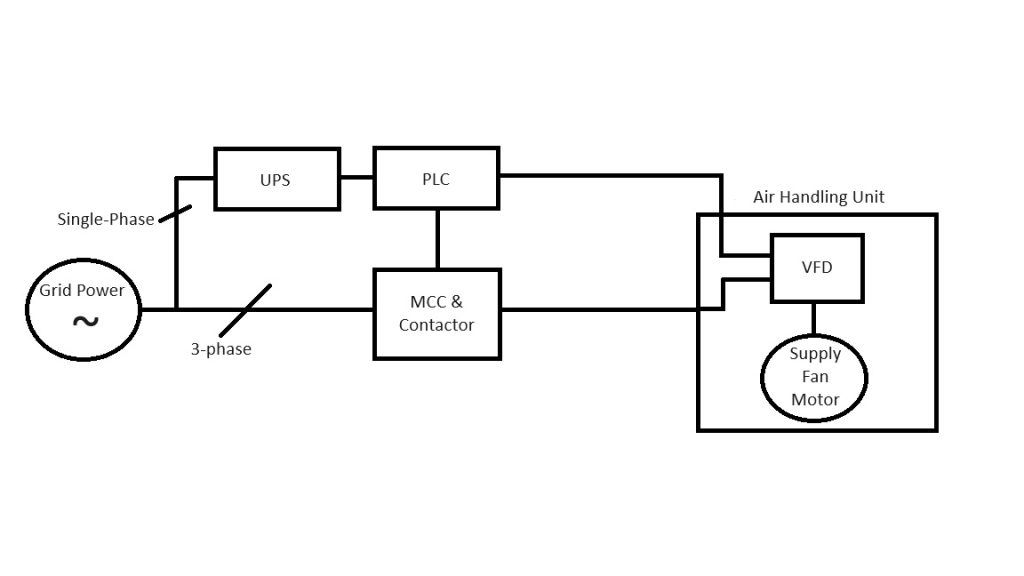
Maintaining positive pressure requires that the air handlers ventilating the space run constantly. These air handlers may use variable frequency drives (VFDs) to control airflow, adjusting the speed of the fan motor by reading pressure sensors to ensure outside air never enters the cleanroom. The control signals of the VFDs are directed by programmable logic controllers (PLC) that tell the drives how much ventilation is needed (i.e., instruct the drives when to enable or disable).
Power Quality Concerns Require Investigation
In 2021, the pharmaceutical plant began having issues. In some cases, VFDs were tripping off and no longer commanding the fan motors to run. The motors, in turn, would shut down, and the pressure in the cleanrooms would go from positive to negative, potentially pulling contaminated air in rather than pushing it out.
Site personnel were notified of these events through automated pressure logs from their power quality software, i-Grid. The culprits were voltage sags — momentary dips in voltage — and the impact was significant: Any product that was made while the cleanrooms were under negative pressure, whether directly tainted or not, had to be discarded. After discarding tainted materials, each cleanroom needed to undergo a vigorous sterilization process before production could resume. In all, this amounted to long periods of downtime for the facility.
The site contacted its electric utility about the problem. The voltage sags that were occurring were within the tolerance of normal grid operation, and customers on the same line were not suffering from interruptions. The VFDs and other digital machines at the facility, however, were highly sensitive to fluctuations in power input and could trip off even when voltage sagged for just milliseconds.
Given that everything appeared normal on the utility side of the electric meter, the electric utility brought in Advanced Energy to investigate. The goal was to find a solution that allowed the VFDs to ride through the voltage sags and avoid nuisance tripping. Our team visited the facility, worked with site personnel and the electric utility, and spoke with the VFD manufacturers. Ultimately, we recommended updating the VFD parameter settings and installing uninterruptible power supplies (UPS).
A UPS is a type of backup power device that can protect equipment from power quality events. Our team recommended adding an online double-conversion UPS before the PLC for each impacted unit, allowing it to isolate the power going into the controller from what was being supplied by the grid. In other words, the UPS regulated and cleaned up the power being seen by the PLC, such that it would no longer cause the VFD to nuisance trip.
Results and Conclusion
After updating the VFD parameters and installing the UPS, the pharmaceutical facility stopped experiencing issues from minor voltage sags. Site personnel estimated that these upgrades solved what accounted for 880 lost labor hours, and the accompanying lost product, over the previous two years of operation.
We appreciated the opportunity to work with the facility and electric utility to solve this critical issue. If your facility needs help navigating power quality disturbances, we can help.
 All Blog Posts