The Importance of Third-Party Verification of IBRs
Across three events in 2021 and 2022, a combined 3 gigawatts of solar generation near Odessa, Texas, tripped offline after improperly responding to routine faults that were cleared in less than one-tenth of a second. The events didn’t trigger outages, as solar penetration at the time was low, but they raised alarming concerns about grid reliability, concerns that will only amplify in the years to come.
As a changing generation mix coincides with an anticipated surge in electricity demand from electrification, artificial intelligence and data centers, grid stability and safety are more important than ever.
The Odessa disturbances, like others before them, were documented by the North American Electric Reliability Corporation, or NERC. NERC monitors grid reliability, develops and enforces reliability standards for the grid (including the inverter-based resource [IBR] industry), and educates, trains and certifies industry personnel. IBRs, which include solar, battery storage and types of wind energy, represent generation sources that rely on inverters to turn the direct current electricity they produce into grid-friendly alternating current electricity.
In a 2022 disturbance report, NERC summarized its findings from one of the Odessa events in light of prior IBR incidents. Based on its conclusions, it offered recommendations and actions it thought the industry should take, including:
- Increasing implementation of NERC guidelines.
- Improving IBR performance-based requirements to better understand how facilities behave.
- Creating a comprehensive ride-through standard to keep facilities online as long as possible.
- Conducting model validation to improve model quality before projects are built — NERC noted that the use of generic models, as opposed to facility-specific models, likely contributed to the Odessa disturbances.
- Strengthening commissioning and verification practices, particularly around construction, settings and controls.
How Third-Party Verification Can Help
The industry has made progress in the years since Odessa. For example, the events and related concerns over future IBR stability led to the creation of the IEEE 2800 standard. Closely modeled after IEEE 1547 for the distribution system, IEEE 2800 addresses requirements for the interconnection and performance of IBRs connecting to transmission and sub-transmission systems. Utilities are now building IEEE 2800 requirements into their own processes and technical documentation.
But the need remains, as NERC identified, for improved IBR commissioning and verification practices. These components can help determine whether facilities actually comply with IEEE 2800, NERC recommendations and transmission owner requirements, and whether what is supposed to be installed on-site — based on what was studied prior to beginning construction — is actually present.
This point was echoed in a recent open meeting of the Federal Energy Regulatory Commission, or FERC, which oversees NERC, with a Commissioner stressing the necessity of more oversight of transmission IBR projects. Oversight in the form of proper third-party verification can reduce operational risk and the likelihood that grid disturbances — such as those that affected Odessa, or worse — occur.
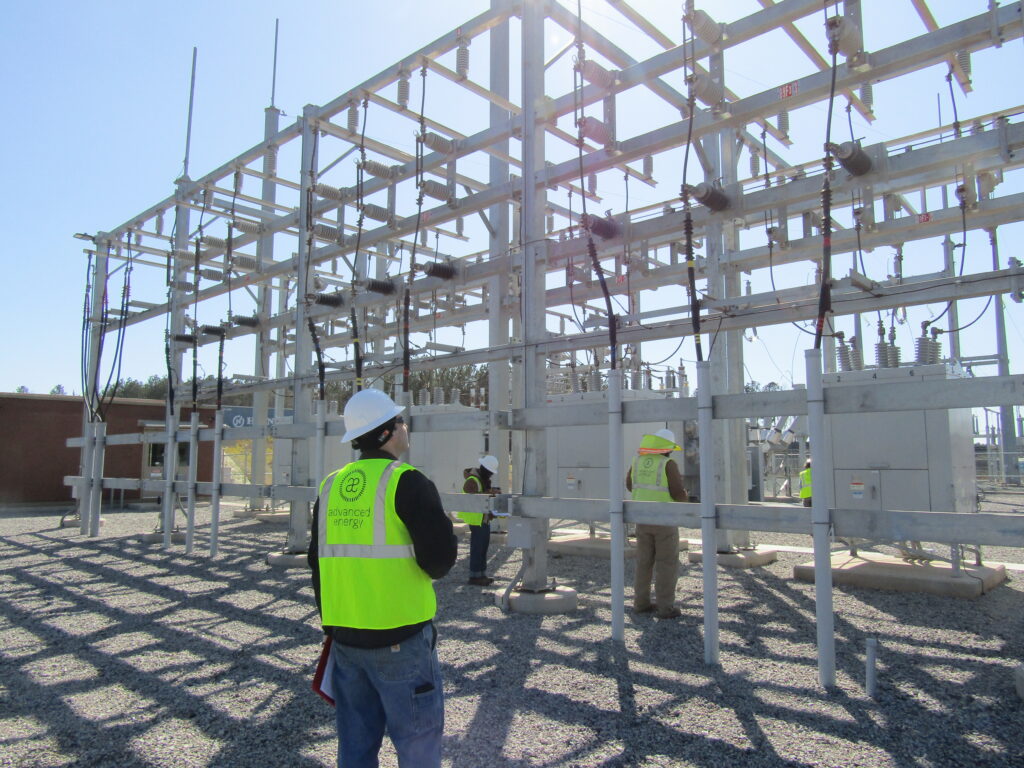
Getting IBR facilities online requires coordination among many parties. Input from experienced independent commissioning and verification experts, like Advanced Energy, can speed up that process and help ensure that sites stay online when needed most.
 All Blog Posts